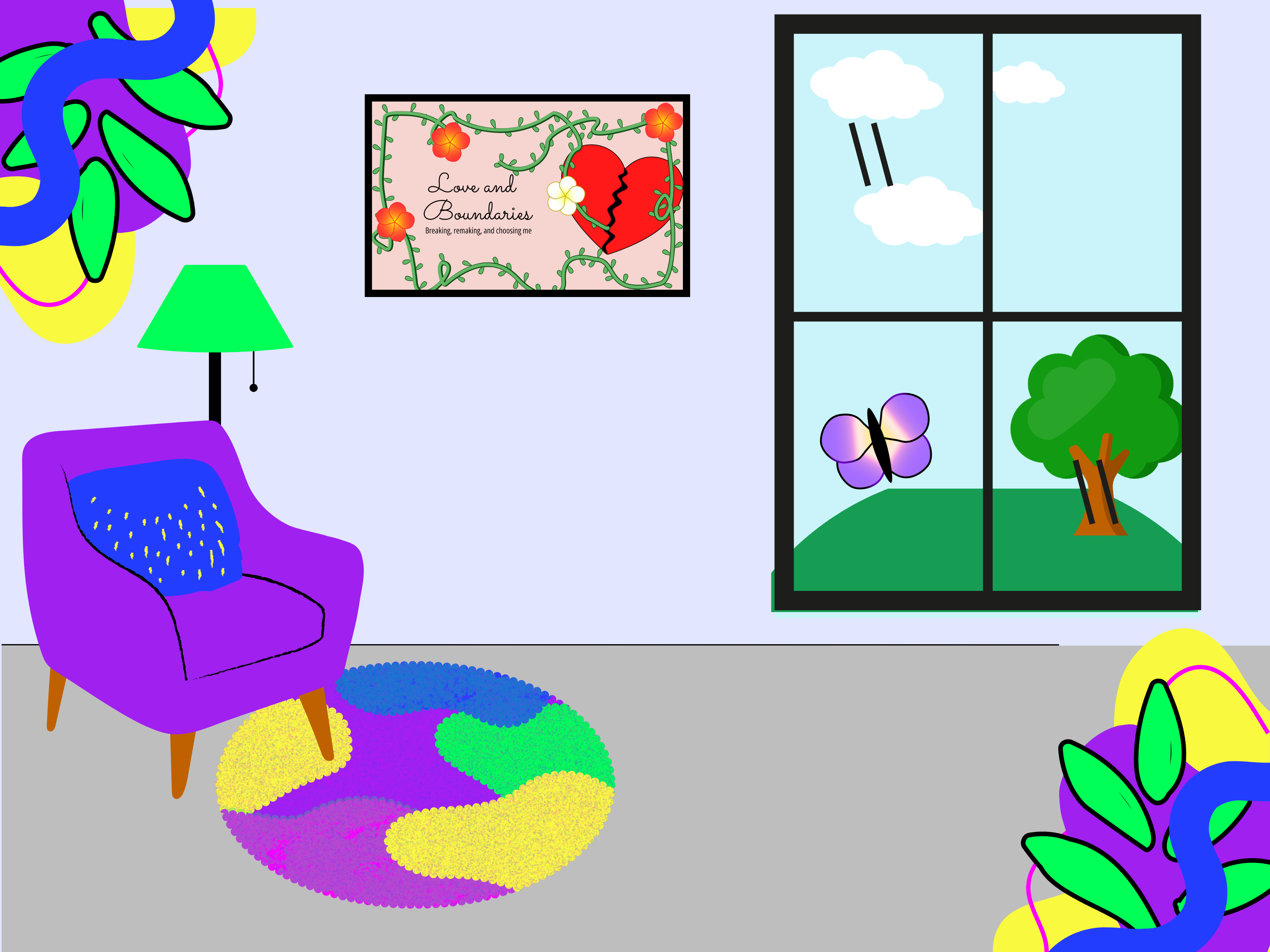
Love & Boundaries: Breaking, remaking, and choosing me.
“Love is a constant state of breaking and remaking, and relationships, they evolve to survive.” —Liz Ortecho, Roswell, New Mexico, Season 4, Episode 13
That line stopped me mid-scroll.
There’s something beautifully raw about the idea that love isn’t static. It doesn’t stay preserved in the form we first found it. It shifts, stretches, and sometimes shatters—only to be put back together again in a new shape. Ideally, one that still honors both people inside of it.
A few years ago, a therapist told me, “Wanting more for yourself is the foundation of self-love.”
At the time, I wasn’t even sure I liked myself—let alone loved myself. I wanted so many things to be different. My hair. My body. My face. My life. I saw all the ways I didn’t measure up and mistook those gaps for unworthiness.
But the moment I stopped resisting and started accepting—even the things I wanted to change—I began to make decisions rooted in love, not fear. And with each right choice, each boundary honored, each hard truth faced, my self-love deepened.
Romantic love, I’ve learned, asks for the same.
The comfort of the familiar
There was a time I started seeing an ex again. Being with him felt like a homecoming—like slipping into something warm and familiar. We had history, rhythm, and moments of laughter that felt effortless.
But then I remembered why I left.
He was reckless. A womanizer. A risk I didn’t want to keep taking. My need for peace and health—emotional, physical, spiritual—outweighed the comfort of nostalgia. So I let it go. Again.
The complexity of chemistry
Then there was SL. Brilliant, funny, and kind in a sharp, direct kind of way. He was honest-ish, and we had chemistry—God, we had chemistry. Or maybe what I mistook for chemistry was actually inconsistency masquerading as depth.
He wasn’t as open about the non-monogamy as I needed him to be. And while I don’t conflate his behavior with my ex-husband’s abuse, I know enough now to question whether my trauma was making breadcrumbs look like a feast.
That’s the thing about romantic connection: it’s not just about what works. It’s about what aligns. Chemistry without clarity is chaos. And I want peace.
Not conflating trauma with discomfort
One of the hardest things I’ve had to learn is how not to paint every new relationship with the brush of old pain. It’s taken work to separate patterns from people, triggers from truth.
I used to think growth meant cutting people off. But now, I’m more interested in evolving the relationship—if it’s safe to do so. I don’t like throwing people away. I want to believe we can pivot, shift, or redefine. Because connection is my lifeblood. It brings me joy.
And still—I love them all. But I also love me.
Acceptance as liberation
These days, I see butterflies everywhere. Symbols of change, evolution, and becoming.
I feel like I’m standing at the edge of something new. Not quite through the door, but close enough to feel the breeze. And as I prepare to walk into whatever’s next, I know this:
There will be days when I don’t like who I am or how I’m thinking. There will be lows alongside the highs. But I can meet myself with softness and honesty. That’s self-love.
The most freeing moment of my life wasn’t leaving my marriage—it was learning to love the man I used to be married to.
Not in a “get back together” kind of way, but in a “let him be exactly who he is” kind of way. I stopped trying to fix or change him. I accepted him as the beastly, broken man he chose to be. And I loved him enough to release him to that life—without me.
That kind of love? It set us both free.
And my life has been better ever since.
Love evolves—and so do I.
I’m not afraid of the breaking anymore. I know how to remake.

 sassystephb.com
Leave a comment